
Mold in Air Ducts: How to Identify, Remove, and Prevent It in Denver Homes
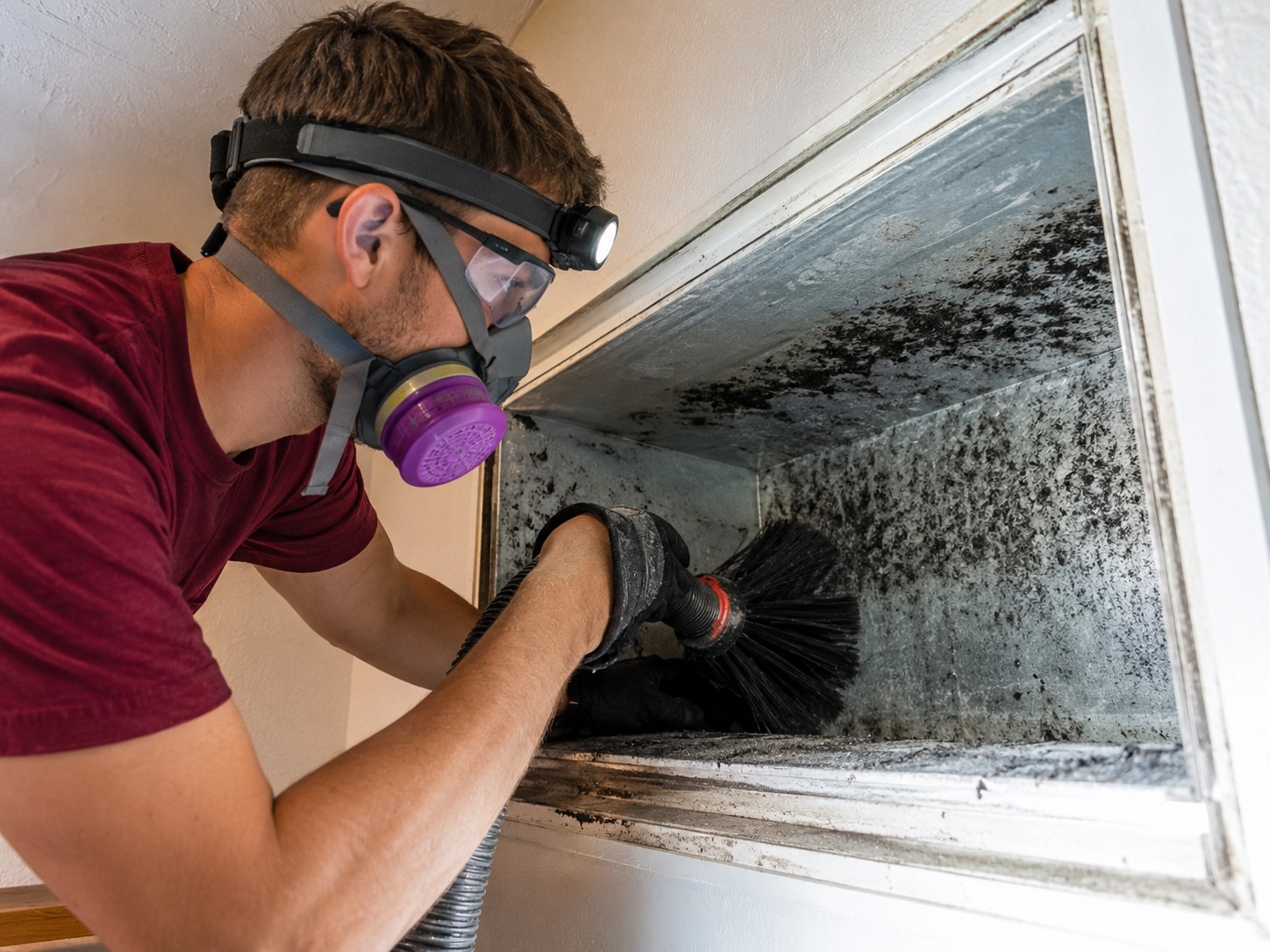


Most homeowners think of mold as something that grows behind a leaky pipe or on a damp basement wall. Fewer picture it growing inside the air ducts that circulate air through every room of the house. But the same conditions that let mold grow anywhere else, moisture and organic dust, exist in HVAC ductwork too. And unlike a mold patch you can see and clean off a wall, mold inside ducts distributes spores throughout the home every time the blower turns on.
Denver’s climate makes this a bigger issue than many homeowners realize. The city’s dry outdoor air is misleading. Inside homes, humidifiers running through the winter, evaporative coolers pushing moisture into ductwork during summer, condensation forming on cold supply lines, and unsealed crawlspaces all create pockets of humidity that mold spores are happy to colonize. Once mold takes hold inside a duct system, cleaning the visible parts of the home does not solve the problem.
This guide covers how to identify mold in air ducts, the health risks specific to indoor mold exposure, when professional remediation is necessary versus when cleaning alone will work, and the Denver-specific conditions that make certain neighborhoods and building types more vulnerable to duct mold than others.
Mold spores are always present in indoor air at low levels. They travel in on shoes, pets, open windows, and everyday household movement. Whether they colonize and grow depends on three conditions coming together: a surface to grow on, a food source, and moisture. Air ducts provide all three.
The surface. Metal ductwork is not a mold food source on its own, but the dust and organic debris that accumulates inside every duct system over the years is. Skin cells, pet dander, cellulose fibers from paper products, cooking residue, and insulation fibers all provide organic material that mold can consume.
The moisture. This is where most duct mold problems start. Sources include condensation on cold air conditioning supply lines during summer, humidifiers integrated into the HVAC system, evaporative cooler overspray, water infiltration from a leaky roof or plumbing above the ductwork, and high humidity in unconditioned crawlspaces where ductwork runs. Even a small amount of consistent moisture over weeks or months is enough for mold to establish.
The temperature. Most household molds grow best between 60 and 80 degrees Fahrenheit, which is exactly the temperature range inside residential ductwork during normal HVAC operation. Duct systems are not cold enough to inhibit mold growth in the way a refrigerator would.
Once colonization begins, spores multiply rapidly and release into the airflow. The blower distributes those spores to every register in the home, where they either settle onto surfaces or get inhaled by whoever is in the room. This is the mechanism by which duct mold becomes a whole-home indoor air quality problem rather than a localized issue.
Mold in ductwork rarely announces itself with an obvious visual clue. The signs are usually indirect, and homeowners often live with them for months before connecting the symptoms to the HVAC system.
A persistent musty smell when the HVAC runs. This is the single most reliable indicator of mold in ductwork. The smell is stronger right when the blower kicks on and gradually fades as the initial burst of duct air dissipates into the room. It tends to be worse at the start of heating or cooling season when the system has been idle and mold has had time to release accumulated spores. If you notice a musty odor coming from your supply vents that you can’t trace to a specific room, the ductwork is the most likely source.
Visible mold around supply or return registers. Sometimes mold growing inside the duct migrates to the register cover or the drywall immediately around it. Small dark spots, fuzzy discoloration, or black staining on or near vents is a strong sign that mold is present inside the duct itself.
Allergy or respiratory symptoms that worsen indoors. Mold exposure symptoms overlap heavily with common allergies: sneezing, runny nose, itchy eyes, sore throat, cough, and in some cases sinus headaches or worsening asthma. The distinguishing pattern is that mold-related symptoms get worse when you’re inside the home with the HVAC running and improve when you’re outside or in a different building. If your allergies flare consistently at home but ease when you’re at work or traveling, indoor air quality is worth investigating.
Excessive dust around supply vents shortly after cleaning. Mold colonies inside ducts create particulate matter that settles on surfaces near vents. If you’re cleaning dust off the same surfaces every few days despite no obvious source, the ductwork may be shedding debris that includes mold particles.
Visible mold inside the HVAC unit itself. If you can see the evaporator coil, blower compartment, or drain pan and notice discoloration, slime, or fuzzy growth, that mold is almost certainly also present in the connected ductwork. The HVAC cabinet and the ducts are one continuous system.
Recent water damage in or near the ductwork. Any water event that touched the HVAC system or the space above or around the ducts, including a roof leak, plumbing failure, or flooded basement, creates a high risk of subsequent mold growth. Ducts that got wet and were not properly dried within 24 to 48 hours should be inspected regardless of whether visible mold has appeared yet.
Not all mold exposure produces symptoms, and not all people react the same way. Individual sensitivity varies significantly, and some occupants of a home with duct mold may feel fine while others experience serious symptoms. The Centers for Disease Control and Prevention notes that mold exposure can cause a range of health effects, particularly in people with allergies, asthma, or weakened immune systems.
Common health effects associated with prolonged indoor mold exposure include:
Higher-risk groups include infants and young children, elderly occupants, people with existing respiratory conditions like asthma or COPD, people undergoing chemotherapy or otherwise immunocompromised, and people with mold allergies specifically. For these groups, exposure to duct mold is not just uncomfortable but a genuine health hazard that warrants prompt professional attention.
The specific mold species matters less than most homeowners assume. Popular concern focuses on “black mold” (Stachybotrys chartarum), but health effects from more common household molds like Aspergillus, Cladosporium, and Penicillium can be just as significant depending on individual sensitivity and exposure duration. Testing to identify the specific species is rarely necessary before remediation because the response is the same regardless: remove the moisture source, remove the mold, and prevent recurrence.
Denver’s reputation for dry air can create a false sense of security about indoor mold risk. The reality is more complicated, and several Denver-specific factors increase the likelihood of mold growth inside HVAC ductwork.
Widespread use of humidifiers. Denver’s winter humidity often drops below 20 percent indoors without supplemental moisture. Most homeowners run whole-house humidifiers integrated with the HVAC system, adding moisture directly into the ductwork. When these humidifiers are miscalibrated, leak, or run at settings too high for the building envelope, they push moisture into ducts faster than the system can distribute it, creating pooling and condensation inside the ducts themselves.
Evaporative coolers. Many Denver homes, especially older properties in neighborhoods like Park Hill, Sloan’s Lake, and University Park, use evaporative (swamp) coolers instead of traditional air conditioning. These systems work by pushing moisture into the air, and older or poorly maintained units introduce significant humidity into ductwork through overspray or failed pads. The transition period each fall when the cooler is turned off but ductwork is still damp is a common mold colonization window.
Summer AC condensation in older homes. Denver’s dramatic day-to-night temperature swings, sometimes 30 degrees or more, create conditions where cold AC supply ducts running through uninsulated attics or crawlspaces develop surface condensation. In homes without properly sealed or insulated ductwork, this creates moisture pockets that support mold growth on both the interior and exterior of the ducts.
Older building stock with unsealed crawlspaces. Homes built before modern building code requirements often have ductwork running through unconditioned crawlspaces with dirt floors and no vapor barrier. Groundwater evaporating from the soil creates persistently high humidity around the ducts, which condenses on cold duct surfaces during cooling season.
Wildfire smoke infiltration. Wildfire seasons have become an increasing feature of Colorado summers, and homes across the Denver metro pull in smoke-laden air during these events. The particulates settle in ductwork and add to the organic material available for mold to consume once moisture is introduced. This isn’t a direct mold cause but it accelerates the process wherever moisture already exists.
Building age, construction type, and typical HVAC configurations all vary across the Denver metro, and some neighborhoods see duct mold issues more often than others.
Older neighborhoods with mixed HVAC eras. Homes in Capitol Hill, Baker, Curtis Park, Whittier, and the Highlands often have HVAC systems added or upgraded over multiple decades, resulting in ductwork of varying ages and materials. Older galvanized ductwork joined to newer flexible ducting creates transition points where sealing gaps allow humid crawlspace or attic air to enter the system. These homes also frequently have evaporative coolers or older AC units that contribute to summer humidity inside ducts.
Mid-century ranch homes with attic ductwork. Neighborhoods like Wheat Ridge, Applewood, Lakewood, and parts of Arvada are dominated by 1950s to 1970s ranch-style homes where ductwork runs through unconditioned attics. Summer heat radiating into attics combined with cold supply air passing through the ducts creates significant temperature differentials that promote condensation. Attic insulation upgrades over the years have often left the ductwork itself under-insulated relative to modern standards.
Basements in older homes with historic water intrusion. Homes across older Denver neighborhoods often have basements that experienced flooding or water intrusion at some point in their history, especially during the 2013 flooding events that affected large portions of the metro. HVAC systems located in these basements, even years after the water event, can have residual mold contamination in ductwork that was never fully remediated.
New construction homes with tight building envelopes. Newer homes in developments across Aurora, Highlands Ranch, Broomfield, and Thornton have tighter building envelopes that reduce air exchange with the outdoors. This is generally good for energy efficiency but creates conditions where any moisture generated inside the home (from showers, cooking, plants, humidifiers) stays in the interior air longer and has more opportunity to condense on cold surfaces including ductwork. Newer construction is not automatically safe from duct mold; sometimes it’s more vulnerable.
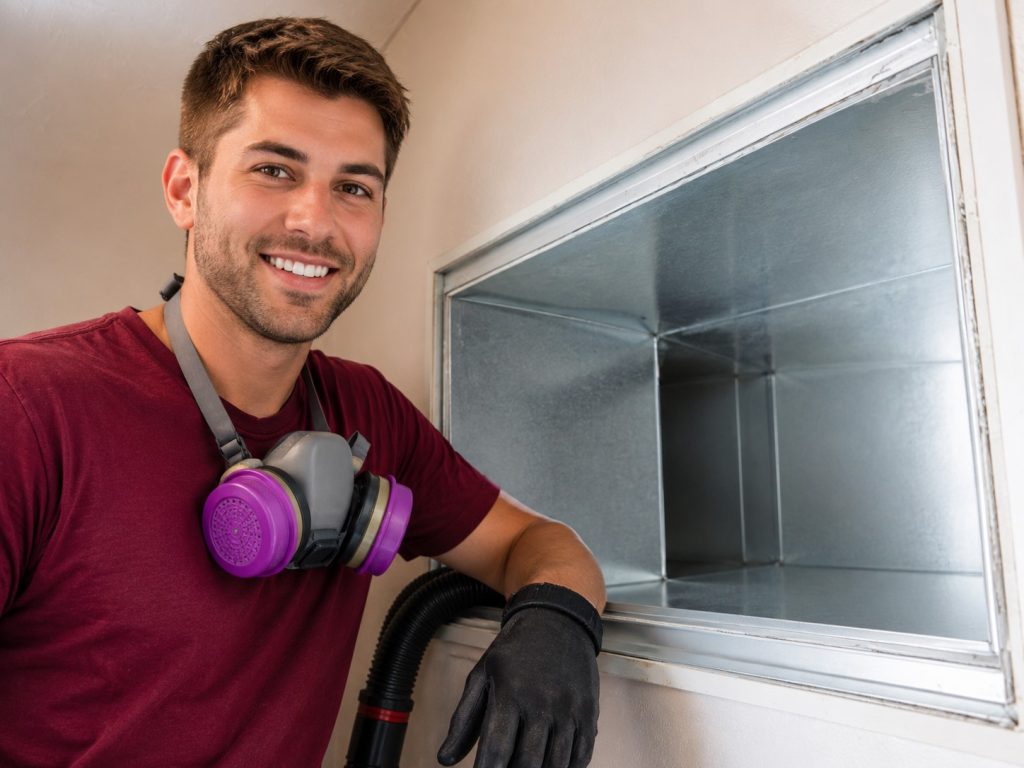
Duct mold remediation is not the same as routine air duct cleaning. Standard cleaning removes dust and debris. Mold remediation additionally addresses the biological contamination, kills active mold, and prevents regrowth. The process combines mechanical cleaning with antimicrobial treatment and, in most cases, an assessment of the moisture source that allowed mold to grow in the first place.
A complete professional duct mold remediation typically includes:
Initial inspection and scope assessment. The technician inspects supply vents, return vents, the HVAC cabinet, and accessible sections of ductwork to identify visible mold, assess the extent of contamination, and check for moisture sources. Photos are typically taken to document conditions before work begins.
Containment and system shutdown. The HVAC system is turned off and vents are covered to prevent spore distribution during the cleaning process. In cases of significant contamination, containment barriers may be used to isolate the work area.
Mechanical agitation and vacuum extraction. Rotary brushes and compressed-air whips physically dislodge mold, biofilm, and contaminated dust from duct walls. A HEPA-filtered negative-pressure vacuum captures the dislodged material into a sealed containment system, preventing recirculation into the home.
Antimicrobial treatment. After mechanical cleaning, an EPA-registered antimicrobial product is applied throughout the duct system to kill remaining mold spores and inhibit regrowth. Product selection matters here; the treatment should be specifically labeled for HVAC use and safe for indoor air distribution.
HVAC cabinet cleaning. The evaporator coil, blower compartment, and drain pan are inspected and cleaned as part of the process. Mold in the HVAC cabinet is often the source of duct contamination, and cleaning ducts without addressing the cabinet leads to rapid recontamination.
Moisture source identification. The technician identifies and reports any moisture sources that contributed to the original mold growth: leaking humidifier, failing drain pan, insufficient duct insulation, roof leak above ductwork, or crawlspace humidity. Remediation without addressing the moisture source guarantees recurrence.
Post-remediation verification. Final inspection confirms visible mold has been removed and, in more severe cases, air quality testing may be recommended to verify spore counts have returned to normal levels.
Red Rocks Air Duct provides professional residential air duct cleaning with antimicrobial treatment for Denver homes dealing with mold or microbial concerns. For heavy contamination, additional mold remediation specialists may need to be involved alongside duct cleaning.
Homeowners sometimes attempt to clean mold from air ducts using household bleach, vinegar, or store-bought antimicrobial sprays applied to visible vents. This approach has limits, and understanding them prevents wasted effort and continued exposure.
The EPA specifically advises that fiberglass duct board or fiberglass-lined ductwork with mold contamination generally needs to be replaced rather than cleaned, because porous materials absorb mold in ways that surface cleaning cannot address. Their guidance on mold cleanup in the home outlines the differences between surface cleaning and remediation.
DIY cleaning is reasonable when:
Professional remediation is warranted when:
Attempting DIY cleaning on heavily contaminated ductwork typically spreads spores through the home during the cleaning process itself, making the exposure problem worse rather than better.
Remediation solves the current problem. Prevention is what keeps mold from coming back. The underlying issue is always moisture, and controlling moisture in and around ductwork is the long-term strategy.
Keep indoor humidity between 30 and 50 percent. This range discourages mold growth throughout the home, not just in ducts. Denver homes running winter humidifiers should be monitored with a hygrometer to ensure the humidifier isn’t overshooting into the 60+ percent range where mold thrives. Summer AC operation should keep humidity in this range naturally, but homes using evaporative coolers may need supplemental dehumidification during monsoon-humid stretches.
Service humidifiers annually. Whole-house humidifiers that leak, drift out of calibration, or accumulate mineral scale become mold sources themselves. Annual inspection during furnace maintenance catches problems before they contaminate the duct system.
Insulate ducts running through unconditioned spaces. Ductwork running through attics, crawlspaces, or garages should be insulated to R-6 minimum, higher in more extreme locations. This prevents temperature differentials that cause condensation on duct surfaces.
Seal duct joints properly. Loose duct connections allow humid unconditioned air to enter the system where it can condense on cold surfaces. Professional duct sealing with mastic or approved tape addresses this issue.
Address crawlspace moisture at the source. Vapor barriers on crawlspace floors, encapsulation systems, and dehumidifiers reduce the ambient humidity around ductwork running through these spaces. This is particularly important for older Denver homes with dirt or partial dirt crawlspaces.
Change HVAC filters on schedule. Higher-quality pleated filters capture more particulate matter and reduce the organic material available for mold to consume in downstream ductwork. MERV 8 to MERV 13 filters, changed every 60 to 90 days, are the practical range for most residential systems.
Schedule routine duct inspection. Periodic professional inspection, even without full cleaning, catches early signs of moisture or biofilm buildup before mold establishes. This is worth doing every one to two years for high-risk homes and every three to five years for lower-risk homes.
Duct mold remediation cost varies more widely than standard duct cleaning because the scope depends on the extent of contamination, the type of ductwork involved, whether the HVAC cabinet needs cleaning, whether any ducts need replacement rather than cleaning, and what antimicrobial treatment protocol is appropriate.
Factors that affect the price include:
Homeowners should be cautious of extremely low advertised prices for mold-related duct work. Genuine remediation involves labor, specialized equipment, and EPA-registered products that don’t fit inside a “$99 whole-home special.” Ask for a written scope of work that identifies what the technician will actually do and what antimicrobial products will be used before authorizing service.
Red Rocks Air Duct provides free on-site estimates for duct cleaning and antimicrobial treatment services, with pricing based on the actual condition of your specific system rather than a blanket flat rate.
Homeowners often ask whether they should have their air tested to confirm mold is present before scheduling remediation. The honest answer is usually no, and here’s why.
Air quality testing measures spore concentrations at the moment of the test. Levels fluctuate based on HVAC operation, outdoor conditions, and household activity. A single test rarely provides definitive answers, and interpreting the results without professional expertise leads homeowners to either panic over normal readings or ignore genuine problems.
The EPA’s guidance on mold testing notes that in most cases, testing is unnecessary because if visible mold is present, cleanup should proceed regardless of species. The response to any confirmed mold problem is the same: identify the moisture source, remove the mold, prevent recurrence.
Testing may be appropriate when:
For most Denver homeowners or business owners noticing the warning signs covered earlier in this guide, professional inspection by a qualified duct cleaning company is a more useful first step than air testing. A technician can visually confirm the presence and extent of duct mold and recommend appropriate action based on what they actually find.
Patterns show up repeatedly when we work with Denver homeowners who have persistent duct mold issues. Recognizing these mistakes helps prevent recurring problems.
Treating the smell instead of the source. Air fresheners, scented HVAC filters, and duct deodorizers mask musty mold odors temporarily but don’t address the underlying contamination. Homeowners sometimes cycle through these products for months before recognizing that the smell is a symptom, not the problem.
Cleaning ducts without fixing the moisture source. If the humidifier is leaking, the crawlspace is humid, or the AC drain pan is failing, cleaning the ducts alone will not prevent mold from returning. Remediation without moisture control is a temporary fix that costs money and produces disappointing results within months.
Assuming lack of visible mold means no mold. Ductwork mold often grows in sections that aren’t visible from vents. The absence of visible growth around registers doesn’t rule out contamination further into the duct system. Persistent musty smells or unexplained respiratory symptoms warrant professional inspection even when nothing looks wrong at the vent.
Using UV lights as a standalone solution. UV light purification systems installed in HVAC units can help control microbial growth at the point of installation, but they don’t clean existing contamination in the ducts downstream. Homeowners sometimes purchase and install UV systems expecting them to solve a mold problem the light never actually reaches. UV works as a maintenance tool, not a remediation tool.
Waiting until symptoms are severe before acting. Mold exposure symptoms often develop gradually, and household members adjust to living with them without recognizing the cause. By the time symptoms are severe enough to prompt action, the mold has often been present for months or years. If you’ve noticed any of the warning signs in this guide, earlier action produces better outcomes at lower cost.
Mold in air ducts is a genuine indoor air quality problem that affects more Denver homes than most homeowners realize. The city’s dry outdoor climate creates false confidence about indoor moisture risks, and common features of Denver HVAC systems, from whole-house humidifiers to evaporative coolers to attic-mounted ductwork, all create conditions where mold can establish and spread.
The warning signs are usually indirect: a persistent musty smell when the HVAC runs, allergy symptoms that worsen indoors, excessive dust around vents, or visible discoloration near registers. Recognizing these signs early and addressing them before the mold spreads throughout the duct system produces better outcomes for both health and cost.
Professional remediation combines mechanical cleaning with antimicrobial treatment and moisture source identification. DIY cleaning is appropriate only for limited surface contamination on non-porous ductwork; anything more extensive requires professional equipment and expertise to remove safely without spreading spores through the home during the cleaning process.
Next steps:
Walk through your home when the HVAC first turns on and note whether you smell anything musty coming from supply vents
Check your indoor humidity with an inexpensive hygrometer, ideally in multiple rooms, and confirm you’re between 30 and 50 percent
Inspect your supply and return registers for any visible discoloration, staining, or fuzzy growth
Schedule a professional inspection with Red Rocks Air Duct if you notice any of the warning signs covered in this guide or if your ducts haven’t been inspected in more than three years
How do I know if the mold in my home is coming from the air ducts?
The clearest indicator is that the musty smell is strongest when the HVAC system first turns on and gradually fades once the air distributes. If the smell tracks with HVAC operation rather than with weather, cooking, or a specific room, the ductwork is the likely source. Visible mold or discoloration around supply registers, especially in multiple rooms of the home, also points to duct contamination rather than a localized issue. A professional inspection can confirm what a visual check from the outside cannot.
Can I get sick from mold in my air ducts?
Yes, prolonged exposure to airborne mold spores can cause a range of health effects including respiratory symptoms, allergic reactions, sinus issues, headaches, and worsening of asthma. Sensitivity varies significantly by individual, and some occupants of a home with duct mold may experience severe symptoms while others feel fine. Higher-risk groups include infants, elderly occupants, asthmatics, and immunocompromised individuals. The CDC provides detailed guidance on mold-related health effects.
Does duct cleaning kill mold?
Standard mechanical duct cleaning removes mold along with dust and debris, but it doesn’t necessarily kill remaining spores or prevent regrowth. Effective mold remediation combines mechanical removal with EPA-registered antimicrobial treatment applied throughout the duct system. Without the antimicrobial step, surviving spores can re-establish colonies if any moisture remains. For confirmed mold contamination, ask specifically about antimicrobial treatment as part of the service scope.
How long does it take mold to grow in air ducts?
Under the right conditions, mold can begin colonizing a moist surface in 24 to 48 hours. Visible growth typically appears within a week to ten days. This is why water damage events, plumbing failures, or HVAC system floods require rapid drying to prevent mold establishment. Ductwork that got wet and stayed damp for more than two days almost certainly has some level of mold contamination even if it’s not yet visible.
Will running my HVAC spread mold spores through the house?
If mold is present inside the ductwork, every HVAC cycle distributes spores throughout the home. This is the primary reason duct mold is a whole-home problem rather than a localized issue. If you suspect mold in the ducts, running the system less until remediation is completed can help limit exposure, though shutting off HVAC entirely isn’t practical in Denver’s temperature extremes. Prioritize scheduling professional inspection rather than trying to manage exposure long-term.
Does homeowners insurance cover mold in air ducts?
Coverage depends on the cause. Mold that results from a sudden, covered water damage event (like a burst pipe) is often covered under standard homeowners policies, at least in part. Mold from long-term humidity, poor maintenance, or gradual leaks is typically excluded. Review your specific policy or contact your insurance agent to understand what your coverage includes before assuming remediation will be reimbursable.
Can I install a UV light in my HVAC to prevent mold?
UV light purification systems installed near the evaporator coil can help inhibit mold and microbial growth at that location, which is one of the most common sources of duct contamination. They’re a useful preventive tool for homes at high risk of mold recurrence. They do not, however, clean existing contamination further down the duct system, and they don’t address moisture sources that allowed mold to establish in the first place. Consider UV installation as part of a broader prevention strategy rather than a standalone solution.
Does Red Rocks Air Duct handle mold-related duct cleaning in Denver?
Yes. Red Rocks Air Duct provides residential air duct cleaning and commercial air duct cleaning with optional antimicrobial treatment for homes and businesses dealing with mold or microbial contamination. For heavily contaminated systems, particularly those with fiberglass-lined ductwork or extensive contamination from water damage, we may recommend coordinating with a certified mold remediation specialist for portions of the work. Call for a free on-site inspection to determine the appropriate scope for your specific situation.