
Air Duct Cleaning After Wildfire Smoke in Denver: Do You Need It?



Air duct cleaning after wildfire smoke in Denver is worth considering when an inspection finds substantial deposits or debris being released from the ductwork. Outdoor haze or a smoky smell alone is not enough to make that decision. Start with suitable filtration, check the HVAC system, and address smoke residue elsewhere in the home.
When the sky clears but the house still smells smoky, it is tempting to book a whole-home duct cleaning and expect the problem to disappear. The source may be a loaded filter, contaminated duct surfaces, upholstery, or several of those at once. Each calls for a different response.
This guide helps Denver homeowners decide what to check first, what a useful inspection should document, and when a standard cleaning appointment is too limited for the problem. Red Rocks Air Duct provides free estimates for homeowners in Denver and surrounding communities.
No. Smoke exposure is a reason to assess the home, not an automatic reason to clean every duct. The EPA does not recommend routine duct cleaning simply because time has passed. Its consumer guidance points to specific conditions, including substantial deposits that release particles into rooms, vermin infestation, and substantial visible mold growth on appropriate system surfaces.
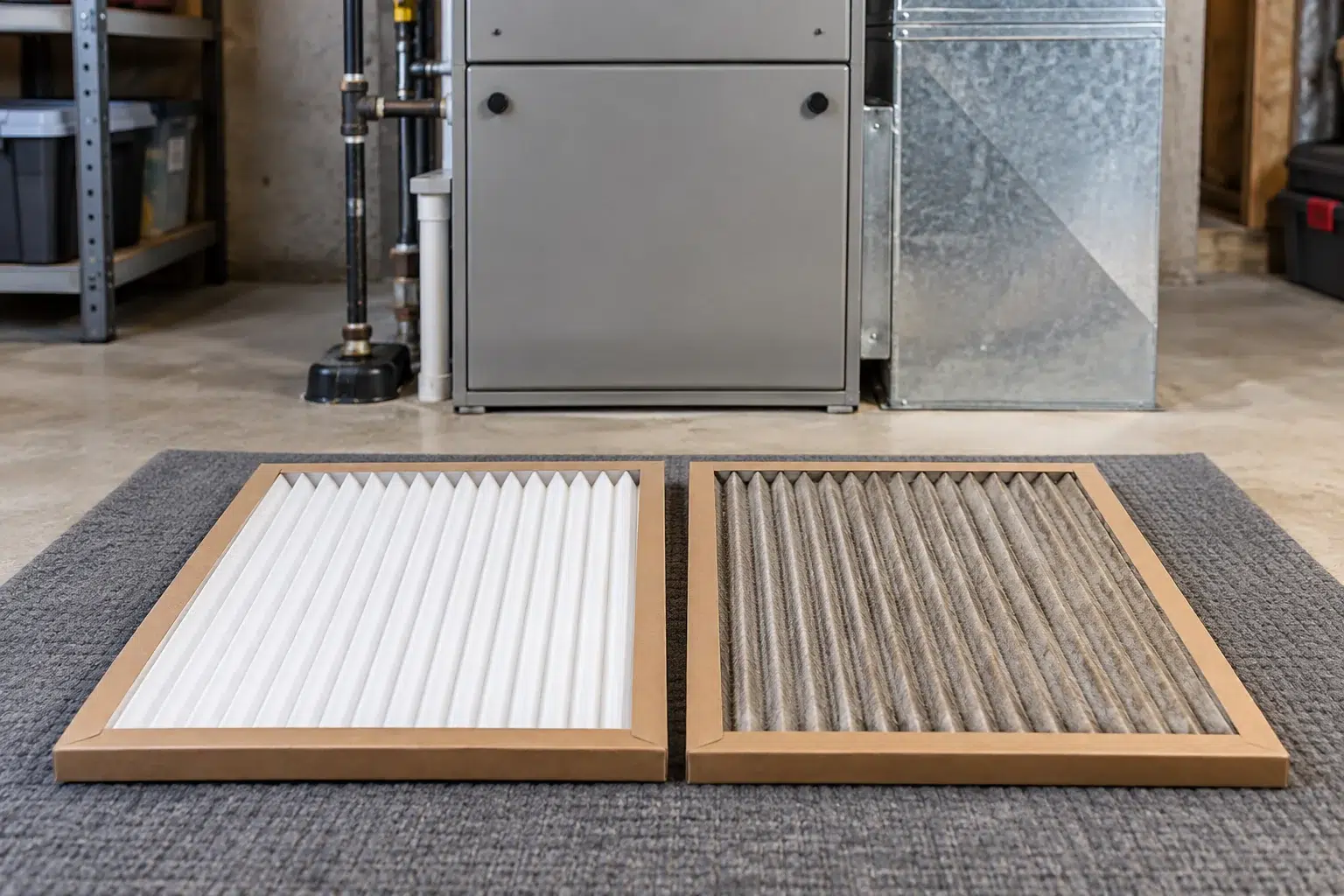
For a smoke concern, ask the inspector to show where residue is present and explain what cleaning that location would accomplish. A dirty return grille can collect ordinary household dust. A gray filter shows that material has been captured, but its color cannot identify the material or prove that the entire system is contaminated.
If deposits inside the system justify service, residential air duct cleaning can remove accessible accumulated material. It does not stop outdoor smoke entering again, remove every smoke-related gas, or certify that the home’s air is safe.
Use the observations below to choose the next step. This is a decision guide, not a diagnosis from a photograph or smell.
| What you notice | Useful next step | What it does not establish |
|---|---|---|
| Outdoor smoke, with no visible deposits inside | Reduce smoke entry, use suitable filtration, and check filters frequently. | That the ducts need cleaning. |
| A filter has become heavily soiled or smells smoky | Replace it according to equipment instructions and check its fit. | Which pollutants are present elsewhere in the system. |
| Particles repeatedly blow from supply registers | Arrange a system inspection and ask for photos of the affected sections. | Whether the material is smoke residue, dust, deteriorating lining, or something else. |
| A smoky odor persists after filter replacement | Investigate room surfaces and furnishings as well as the HVAC system. | That duct cleaning alone will resolve the odor. |
| Heavy soot, indoor ash, or direct fire damage | Seek a fire-restoration assessment before routine cleaning. | That a standard residential duct-cleaning scope is sufficient. |
A contractor should be able to explain the difference between an observation and a conclusion. “Here is debris in this supply run” is useful evidence. “Denver had a smoky week, so every home needs sanitizing” is not a property-specific assessment.
During an active smoke event, focus on reducing incoming smoke and filtering indoor particles. Keep windows and exterior doors closed when conditions allow you to stay safely cool. Check current local air-quality advisories rather than assuming that a clearer mountain view means conditions have returned to normal.
For compatible forced-air equipment, the EPA recommends a MERV 13 filter or the highest efficiency the system can accommodate. Filter dimensions, fit, and airflow resistance matter as much as the number on the packaging. Ask an HVAC professional if you are unsure what your equipment supports, particularly before replacing a low-resistance filter with a denser one.
An evaporative cooler, often called a swamp cooler, works differently from a central air conditioner. It draws outdoor air into the home, which can bring smoke indoors. During smoky conditions, follow public-health guidance and the equipment manufacturer’s advice about limiting its use. If shutting it off makes the house dangerously hot, arrange a cooler location with cleaner air.
Do not tape a high-efficiency furnace filter over a cooler intake as a universal fix. Added resistance can affect equipment operation, and a filter arrangement that works on one system may be unsuitable for another. Ask a qualified technician about your specific unit.
A renovated bungalow in Park Hill or Washington Park may have a different duct layout from a newer Denver home, even when the floor area is similar. Ask the inspector to identify sheet metal, flexible ducts, and any internal insulation before selecting a cleaning method.
Damaged or heavily contaminated porous material may need replacement instead of repeated brushing. Suspected asbestos-containing material must not be disturbed during routine duct cleaning. The home’s actual materials and condition should determine the work, not its ZIP code or altitude.
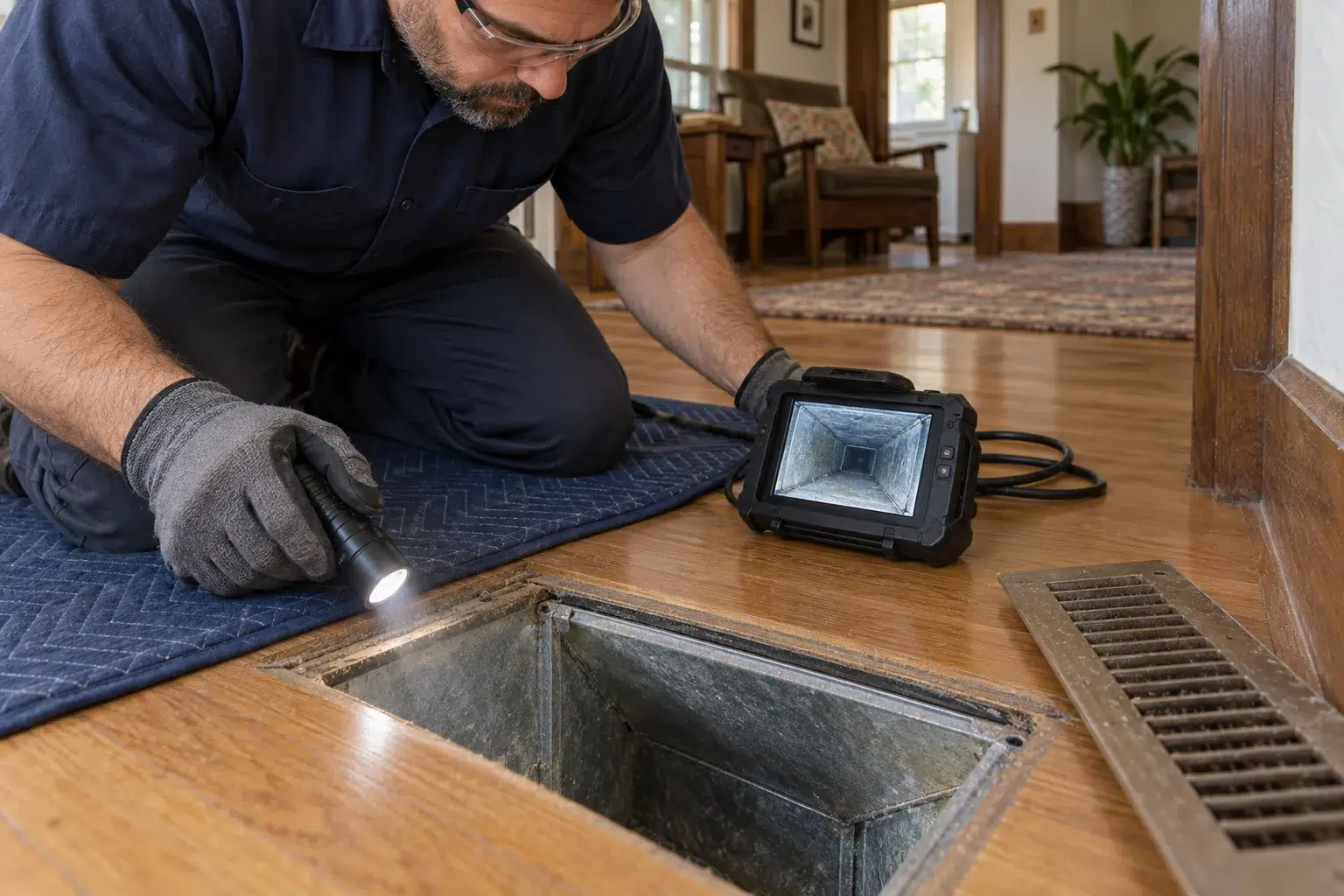
A useful inspection gives you something more specific than a picture of one dusty grille. Ask which parts of the system were accessible and which could not be examined. Keep a record of where each photograph was taken so the findings can be checked after service.
If cleaning is warranted, ask how dislodged material will be captured. Vacuum equipment that exhausts indoors should use HEPA filtration, and agitation should suit the duct material. Review the company’s Denver air duct cleaning services, then confirm the scope for your particular system.
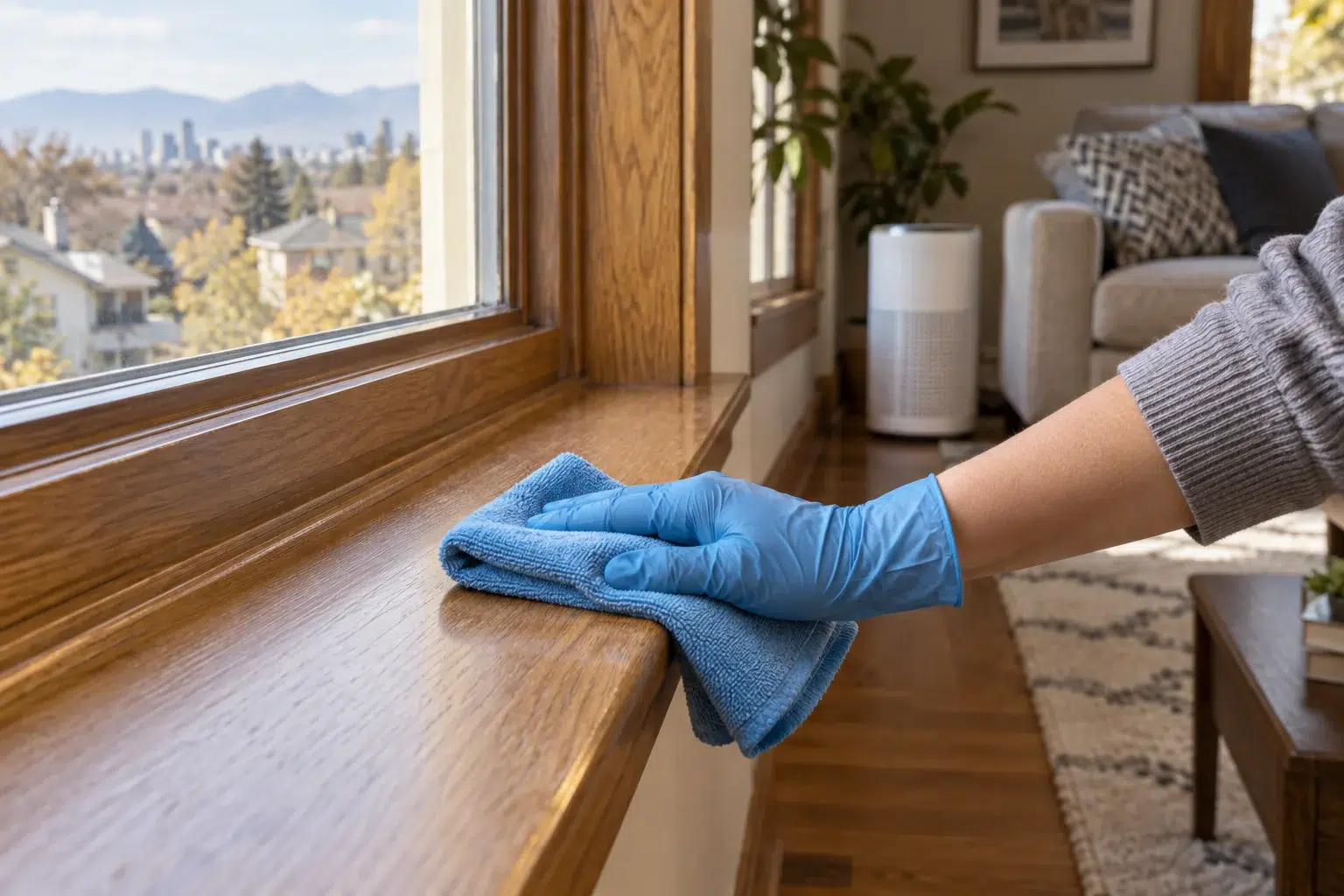
Smoke affects more than the air moving through a vent. Colorado State University research on lingering indoor smoke found that smoke-related compounds could attach to indoor surfaces and later return to the air. Surface cleaning reduced that reservoir in the study. The research was not a test proving that duct cleaning alone removes smoke from a home.
That distinction matters when deciding where to spend money. A particle filter can capture airborne particles; it does not remove all gases or contamination held in furnishings. For light smoke intrusion without fire damage, include appropriate cleaning of washable surfaces and fabrics, following material-care instructions. Use a HEPA-filtered vacuum rather than dry sweeping that can stir dust back into the air.
If odor persists, keep track of where and when it is strongest. Does it remain with the HVAC system off? Is it concentrated near a rug or upholstered chair? Does it return when the fan starts? These observations help narrow the inspection, but they cannot prove the source on their own.
Ask for a written estimate that separates inspection, duct cleaning, equipment cleaning, and any proposed treatment. Smoke exposure does not justify every available add-on. If a product is recommended, ask what it is intended to treat, whether its label permits that use on your duct material, and what evidence supports using it.
For general budgeting, use the existing Denver air duct cleaning cost guide. A smoke-affected property needs an assessment before anyone can say whether ordinary cleaning prices apply. Extensive soot contamination, damaged insulation, or fire restoration can require a substantially different scope.
Before booking, get clear answers to three questions: What did the inspection find? Which parts of the system will this price cover? What will you show me afterward? Neither a deodorizing fragrance nor a photograph of one cleaned vent demonstrates that the entire problem has been resolved.
If smoke is still outside, prioritize suitable filtration and smoke-entry controls. Once conditions improve, check filters and accessible surfaces. Arrange an inspection if deposits, repeated particle release, or persistent odor suggest a problem that basic maintenance has not resolved.
For a Denver duct-cleaning estimate, call Red Rocks Air Duct or request a callback. Describe the exposure, your HVAC type, and any visible deposits when you contact us. That information helps establish whether a routine duct inspection is the appropriate starting point.
No. There is no universal cleaning schedule tied to the number of smoky days. Check filtration and look for a specific reason to inspect the system, such as substantial deposits, recurring particle release, or an unresolved odor. Repeated exposure may justify closer attention, but the cleaning decision should follow the findings in your home.
It may help when contaminated material inside the duct system is contributing to the smell. It cannot promise complete odor removal because smoke-related compounds can remain in fabrics, furniture, and other surfaces. If the house still smells after cleaning, reassess the possible sources rather than repeatedly treating the ducts without new evidence.
They can be used together. A compatible MERV 13 HVAC filter treats air moving through the central system; a properly sized portable HEPA air cleaner adds particle filtration in a room. Neither guarantees removal of all smoke pollutants. Filter fit, operating time, airflow, and room size affect performance, so choose equipment that suits the space and system.
Often, yes, with appropriate filtration and the correct ventilation settings. Many residential central systems mainly recirculate indoor air, while some also have outdoor-air ventilation. Check your setup rather than assuming. The EPA advises running a compatible system’s fan more often during smoke conditions to filter particles. An evaporative cooler requires different advice because it draws outdoor air inside.
There is no evidence-based rule that every home needs service within a fixed number of days. Check filters promptly and arrange an inspection if debris release or a persistent odor remains. Direct fire damage, heavy soot, or significant indoor ash warrants a restoration assessment rather than waiting for an ordinary maintenance appointment.
No. Filter color alone cannot distinguish wildfire residue from ordinary dust or other captured material. A heavily loaded filter deserves replacement, but it is not a diagnosis of every duct surface. Ask the inspector to document the material inside the system and explain whether further assessment is needed before recommending cleaning or replacement.
Not as an automatic response. Smoke contamination and microbial growth are different problems, and an antimicrobial product is not a substitute for removing deposits. Ozone can irritate the lungs and should not be used as a routine occupied-home air-cleaning method. Any proposed chemical treatment needs a clear purpose, appropriate labeling, and an explanation of its limits.
No. A visual inspection documents accessible system surfaces; it is not a comprehensive air-quality test. Even a consumer particle monitor does not measure every gas or contaminant associated with smoke. For significant fire exposure, persistent concerns, or health symptoms, seek the appropriate restoration, indoor-environmental, or medical professional rather than relying on a cleaning receipt as clearance.
Prepared by Red Rocks Air Duct. Technical references reviewed September 18, 2026: EPA guidance on home duct cleaning, wildfire indoor air quality, and indoor air filtration; Colorado State University research linked above. Images are AI-generated photographic illustrations and do not document company employees, customer properties, or measured cleaning results.