
Office Air Duct Cleaning in Denver: Why Dust Keeps Coming Back



Recurring dust needs a source investigation before a cleaning scope is set. AI-generated illustration, not a customer property.
Office air duct cleaning in Denver is worth assessing when inspection finds accumulated debris in the system serving a dusty workspace. Dust returning to desks, or collecting on a ceiling grille, does not identify the source by itself. Start with the room, filters, and air path, then clean the components that the findings justify.
The same desks are dusty again by Wednesday. Your janitorial crew cleaned them Monday, the ceiling vents look gray, and staff want to know whether the HVAC system is responsible. Before approving a building-wide cleaning, collect enough evidence to answer a smaller question: where is the dust entering or collecting?
This guide is for managers of occupied Denver offices, including tenants who share equipment with other suites. It explains what to record, what a useful inspection should resolve, and how to request work without promising employees that cleaning will solve every air-quality concern.
Record where dust returns, how quickly it appears, and whether the pattern changes with occupancy or HVAC operation. Compare a desk near the entrance with one deeper inside the suite. Note recent carpet work, deliveries, stored cardboard, ceiling access, or a change in the cleaning routine. These observations help the contractor choose inspection locations.
Distinguish a supply diffuser, which delivers air to the room, from a return grille, which draws room air back. Dust on the face of a return can come from the room. A gray outline on a diffuser is a reason to examine the area, but it is not a test of the entire duct system.
| What you notice | What to check first | What the finding cannot establish |
|---|---|---|
| Dust concentrates at the entry | Walk-off mats, door traffic, housekeeping, nearby work | That the air handler is the source |
| Debris appears beneath one supply | The diffuser, connected branch, and nearby ceiling materials | That every branch needs the same work |
| Several rooms served by one unit are affected | That unit’s filtration, return path, and accessible components | That replacing a filter alone will resolve it |
| Dust continues with the system off | Room activities, settled material, housekeeping, and other air paths | That HVAC deposits are the only concern |
| Stuffy rooms have little visible dust | Ventilation, schedules, controls, and occupancy | That duct cleaning will correct air delivery |
Give the observations to the person responsible for the HVAC equipment. Ask them to check filter condition, fit, and the service record. A filter with gaps around its frame deserves attention even if it was recently replaced. The right replacement depends on the equipment; choosing a more restrictive filter without checking compatibility can create another problem.
Ask whether the suite has dedicated equipment or shares an air handler, and whether the ceiling space forms part of the return path. That distinction affects both the inspection and the cleaning proposal. A tenant should not authorize work on a shared system without involving building management.
If the initial review points to material inside the system, our commercial air duct cleaning service is the next place to discuss an assessment. Request findings tied to identified locations, with inaccessible areas clearly noted.
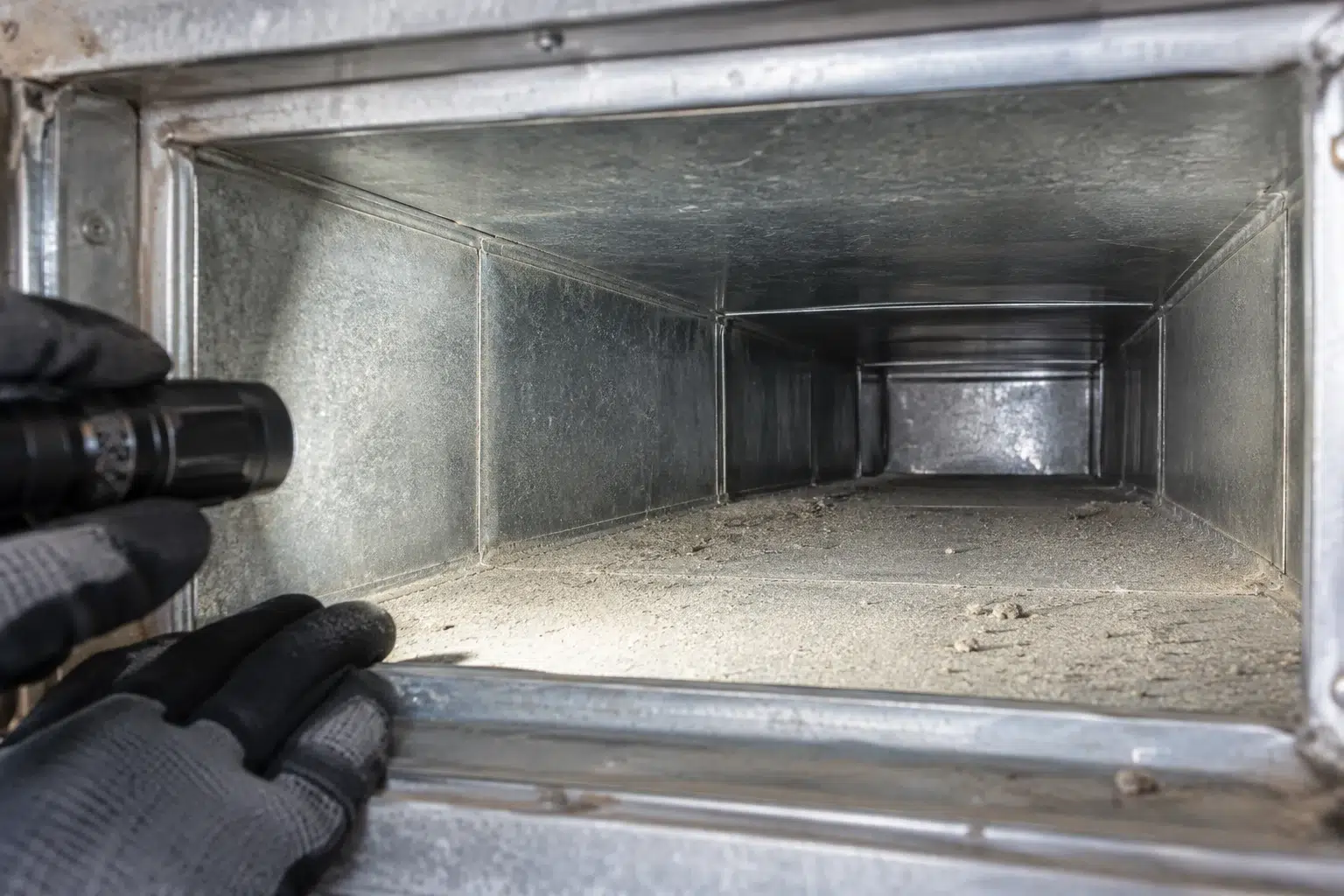
A useful recommendation connects a condition to a scope. For example, an inspection may find loose debris in an accessible supply branch serving the affected desks. The proposal should explain which connected sections and components need attention and why. It should also identify repairs or further investigation that cleaning alone cannot address.
Do not judge the proposal by how alarming one photograph looks. Ask where the image was taken, what it shows, and how representative that location is. A photograph from one branch is evidence about that branch. It is not a survey of every floor.
If the dust began during a tenant improvement project, use our separate post-construction commercial duct cleaning guide. Renovation cleanup has its own sequencing and handover questions. This article concerns recurring dust during normal office use.
The EPA notes that office air quality can involve pollutant sources and inadequate ventilation. Removing deposits from ductwork addresses a particular maintenance condition; it does not measure outdoor-air delivery or establish why someone feels unwell in a meeting room.
Colorado’s public-health department describes several possible causes of indoor-air problems and suggests independent professional investigation when needed. Its guidance on defining an indoor air quality problem is useful when complaints persist or the cause remains uncertain.
Keep a factual complaint log: room, time, occupancy, observable condition, and any relevant maintenance activity. Use it to direct the building investigation. Avoid labeling dust as mold or attributing symptoms to ducts without an appropriate assessment.
For a downtown office, ask about loading access, service elevators, roof access, security check-in, and the building’s permitted work windows. A small suite can still require careful coordination if its equipment serves other tenants. Confirm these constraints before comparing schedules.
After-hours office duct cleaning may be practical, but availability and completion time need confirmation. Identify who approves shutdowns, who communicates with occupants, and who restores operation. Include a handover plan if staff arrive before the building engineer does.
NADCA’s commercial checklist addresses containment, collection, component cleaning, and verification. Use those subjects to question a bid. A proposal that says only “clean all vents” leaves too much unclear.
Agree on what will count as completed work before the crew starts. Keep a record of accessible areas cleaned, areas excluded, filter work, and defects referred to another trade. The contractor’s photographs should document the agreed work without implying that unseen areas were inspected.
After service, repeat your original observations under comparable conditions. Check the same desks after a similar interval and note changes in occupancy or housekeeping. If dust returns, revisit the source investigation instead of automatically ordering another cleaning. Do not interpret an improved surface appearance as an indoor-air-quality certification.
Send your address, suite, approximate floor area, affected rooms, dust history, and any available system information. Include filter records and inspection photos if you have them. State who manages the equipment and whether the office must stay occupied.
Review our Denver duct cleaning services, then request an estimate for your office. Ask for a written scope based on the conditions found, with scheduling and any separate repair needs confirmed before work begins.
Possible causes include material in a supply branch, a damaged component, filter bypass, or dust from nearby ceiling materials. Dust at a return grille can originate in the room. Ask building engineering to identify the opening and inspect the connected air path before attributing the problem to the whole system.
No. The return draws room air toward the system, so surface dust alone does not establish the condition farther inside. Clean the accessible surface through normal maintenance and assess the connected system if the history or recurring pattern warrants it. A cleaning recommendation should explain the actual findings.
Not necessarily. A conference room may have an occupancy, scheduling, control, or ventilation issue. Deposits found in the system may still need removal, but that work does not replace an assessment of air delivery. Give the building engineer the room schedule and complaint pattern so the relevant checks can be arranged.
Set the cleaning interval from inspection findings, building use, equipment requirements, and any applicable specifications. Keep periodic inspection separate from automatic cleaning. An October maintenance review can be useful for planning, but the calendar alone does not prove that an occupied office needs its ducts cleaned every autumn.
Ask about availability after the contractor reviews the system and building restrictions. Shared equipment, security, loading access, and the scope affect the work window. Agree on occupant communication, shutdown responsibility, cleanup, and the return to operation. Do not assume that every commercial project can be completed in one night.
Look for identified systems and zones, included components, access assumptions, protection and collection methods, exclusions, and completion evidence. Ask how newly discovered damage or inaccessible areas will be handled. Compare proposals against the same scope rather than a per-vent headline price that may omit connected equipment.
Research checked October 16, 2026. Written with AI assistance using public technical guidance; no customer case study or measured result is claimed. Images are AI-generated illustrations. Technical references: Colorado Department of Public Health and Environment; U.S. EPA office-building guidance; NADCA commercial cleaning checklist.