
Commercial Hood Cleaning in Denver: Professional Grease Hood and Range Hood Services
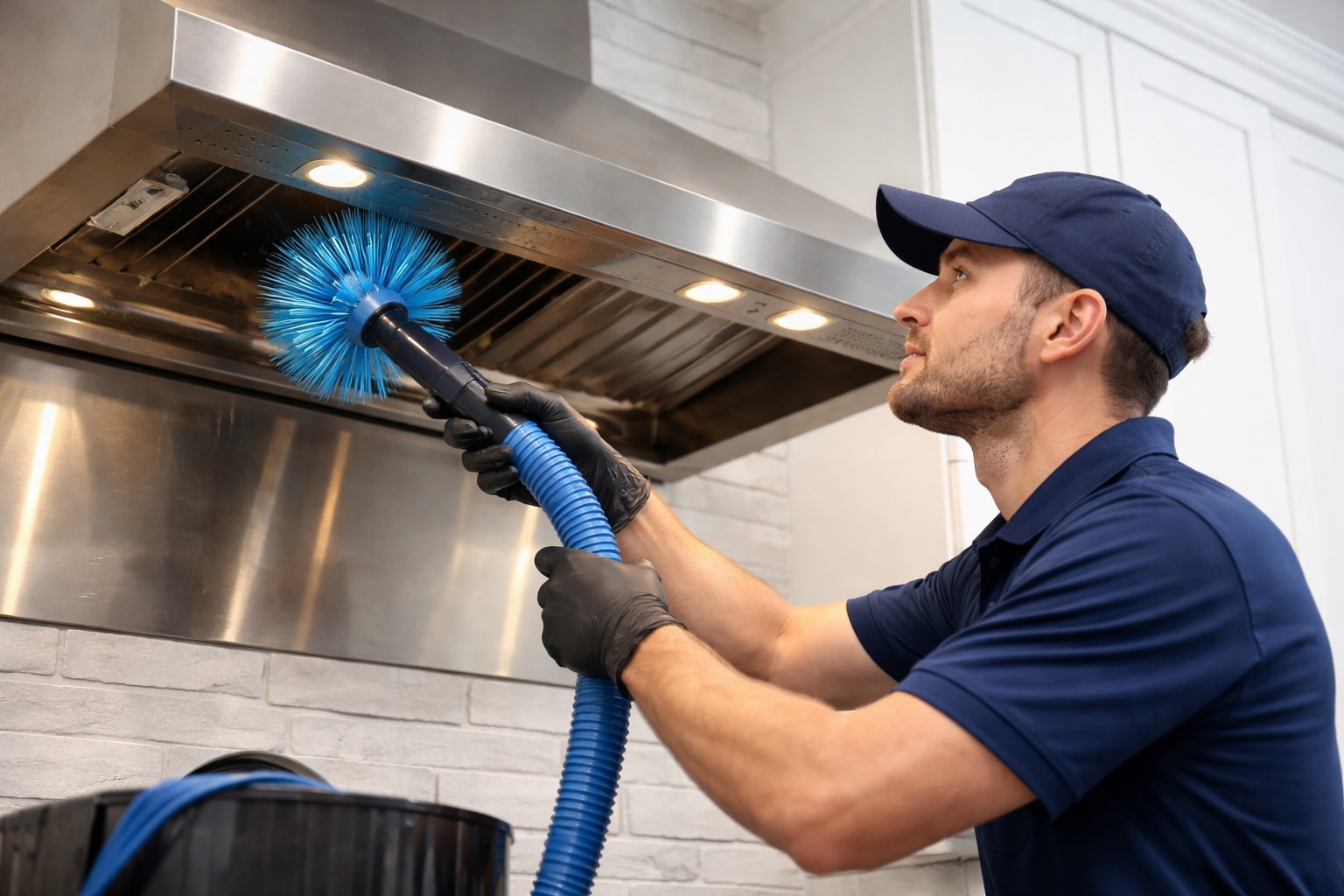


Kitchen exhaust hood cleaning is the professional removal of grease, carbon deposits, and airborne cooking residue from commercial and residential hood systems, including the filters, ductwork, and exhaust fans. Over time, these systems accumulate flammable grease that blocks airflow, traps heat, and creates a serious fire risk if left untreated.
For commercial kitchens, restaurants, hotels, and food-service businesses in Denver, hood cleaning is not optional. Colorado fire inspectors enforce NFPA 96 standards, and failing to keep exhaust systems clean can mean failed inspections, voided insurance coverage, or worse. For homeowners who cook regularly, residential range hood cleaning is just as practical, even if the stakes look different on paper.
Red Rocks Air Duct provides hood cleaning across the Denver metro area for both commercial and residential clients, working to code on every job.

Grease that builds up inside a hood system doesn’t stay put. It migrates into the ductwork, coats the exhaust fans, and gradually restricts the airflow your kitchen depends on. A thick layer of grease in a duct is, functionally, a fire waiting for an ignition source.
Regular professional cleaning removes that risk, keeps ventilation running at the capacity it was designed for, and gives you documentation for fire marshal visits. Denver’s restaurant scene, from LoDo’s busy dinner-hour kitchens to the high-volume food halls in RiNo, puts real demands on exhaust systems. Keeping those systems clean is basic risk management.
Beyond fire safety, a well-maintained hood system also cuts down on lingering cooking odors, reduces energy load on the exhaust fans, and extends the working life of the equipment itself.
Commercial kitchen exhaust systems require professional degreasing on a schedule tied to cooking volume and fuel type. NFPA 96, the national fire safety standard for commercial cooking operations, sets the minimums, and Denver fire inspectors apply them consistently.
A standard commercial hood cleaning service covers:
Red Rocks Air Duct works to NFPA 96 requirements on every commercial project. Whether you run a fast-casual spot in Capitol Hill, a hotel kitchen near Cherry Creek, or a food truck that parks in Washington Park on weekends, the cleaning process is thorough and properly documented.
Grease fires in commercial kitchens spread through the path of least resistance, and a grease-coated duct system is that path. Even a relatively thin deposit can ignite when cooking temperatures spike, and once a fire enters ductwork, it becomes extremely difficult to contain.
Routine grease hood cleaning removes that fuel before it becomes a problem. The practical results are straightforward: lower fire risk, better airflow, reduced load on exhaust motors, and a kitchen that’s safer for the people working in it.
In Denver’s competitive food-service market, a kitchen shutdown from a fire or a failed inspection has direct revenue consequences. Grease hood cleaning isn’t a discretionary expense for most operators. It’s part of keeping the business running.
High-Altitude Grease Accumulation in Dense Commercial Corridors
Denver sits at 5,280 feet above sea level, and the lower atmospheric pressure affects how cooking equipment burns fuel. Burners and fryers often run hotter or less efficiently at altitude, which can accelerate grease vaporization and increase the rate of deposit buildup inside ducts. Restaurants in dense corridors like Colfax Avenue or the Five Points neighborhood, where kitchens run long hours to serve high foot traffic, often accumulate grease faster than the standard quarterly cleaning schedule accounts for. A professional assessment can help determine whether your kitchen needs more frequent service than the NFPA 96 minimums.
Older Building Ductwork in Historic Denver Neighborhoods
Many commercial kitchens in older Denver neighborhoods, particularly in parts of Capitol Hill, the Highlands, and Baker, operate in buildings that were not originally designed for heavy commercial cooking. Ductwork in these buildings is sometimes narrower, more convoluted, or harder to access than modern installations. Standard cleaning equipment doesn’t always reach every deposit in these systems. Red Rocks Air Duct technicians are familiar with the ductwork configurations common in older Denver buildings and carry the equipment needed to clean them properly.
Homeowners who cook frequently, use high-heat methods, or run professional-grade appliances at home benefit from periodic range hood cleaning too. A residential hood system that hasn’t been cleaned in several years can have significant grease buildup in the filters and the duct leading to the exterior vent.
The practical benefits of residential oven hood cleaning include:
Residential cleaning is a smaller scope job than a commercial kitchen, but the cleaning process is just as thorough. Red Rocks Air Duct offers residential range hood cleaning for Denver homes throughout the metro area.
Cleaning frequency is based on how much your kitchen cooks and what kind of cooking it does. The table below reflects NFPA 96 guidelines and practical experience:
| Kitchen Type | Recommended Frequency | Risk Level |
| High-volume commercial kitchens (24-hour, charbroiling, wok cooking) | Every 3 months | Very High |
| Moderate-volume restaurants | Every 6 months | High |
| Low-volume commercial kitchens (churches, seasonal facilities) | Annually | Medium |
| Residential kitchens | Every 12 to 18 months | Low |
These are minimums. Kitchens that cook with solid fuel (wood or charcoal) may need monthly cleaning under NFPA 96. If you’re not sure where your kitchen falls, a professional inspection will give you a clear answer.
A professional cleaning visit follows a defined sequence, and it’s more involved than running a degreaser over the visible surfaces. Here’s what to expect:
The parts that matter most, the interior duct surfaces and the exhaust fan housing, are the parts that DIY cleaning simply cannot reach. That’s why professional service is required under NFPA 96 for commercial operations, not just recommended.
Red Rocks Air Duct is a locally based hood cleaning company serving commercial and residential clients across the Denver metro area, including LoDo, RiNo, Capitol Hill, Cherry Creek, the Highlands, Washington Park, and Five Points.
Every commercial job is done to NFPA 96 standards, with documentation provided after the cleaning. Technicians are trained on the grease hood cleaning process for a wide range of kitchen configurations, including older buildings with non-standard ductwork.
Services include:
A few patterns show up repeatedly when Denver kitchens run into compliance or safety problems:
Skipping scheduled cleanings. One missed cleaning cycle can double the grease load going into the next one, and inspection violations don’t come with much warning.
Hiring unqualified contractors. NFPA 96 requires cleaning by trained and certified personnel. A low-cost provider who can’t produce documentation of their certification puts your compliance record at risk.
Treating the hood filters as the whole job. Filters are the most visible part of the system, but grease migrates deep into ductwork and onto exhaust fan blades. Cleaning only the accessible surfaces leaves the actual fire risk in place.
Hood cleaning in Denver is a practical requirement for any kitchen that produces grease-laden cooking vapors, whether that’s a 200-seat restaurant in LoDo or a residential kitchen in the Highlands where the owner cooks seriously. The fire risk from neglected exhaust systems is real, inspections in Denver are consistent, and the cost of a professional cleaning is modest compared to the cost of a failed inspection or a kitchen fire.
Next steps:
Pricing depends on the size of the system, the current level of grease buildup, and how frequently cleanings are scheduled. Commercial kitchens typically require a site assessment for an accurate quote. Residential hood cleaning is usually a flat or straightforward hourly service.
Yes. Most commercial kitchens in Denver must comply with NFPA 96 fire safety standards. The Denver Fire Department enforces these standards through regular fire safety inspections of commercial occupancies across the city.
Absolutely. Residential range hood cleaning improves indoor air quality, reduces grease odors, reduces risk of mold, and lowers the fire risk near the cooktop. Homeowners who cook frequently or use high-heat appliances typically benefit from cleaning every 12 to 18 months.
Most commercial jobs take 2 to 4 hours, depending on system size and grease levels. Residential cleaning is usually faster.
Grease accumulation increases fire risk, raises the likelihood of failing a fire inspection, and can create issues with your insurance coverage if a fire occurs. In Denver, failed inspections can result in fines or temporary closure orders.
The Denver Fire Department’s Fire Safety Inspections page covers how the city inspects commercial occupancies for fire code compliance. Reviewing those requirements alongside your cleaning schedule is a practical way to stay prepared before an inspector visits.