
Post-Construction Air Duct Cleaning in Denver: A Commercial Tenant Guide
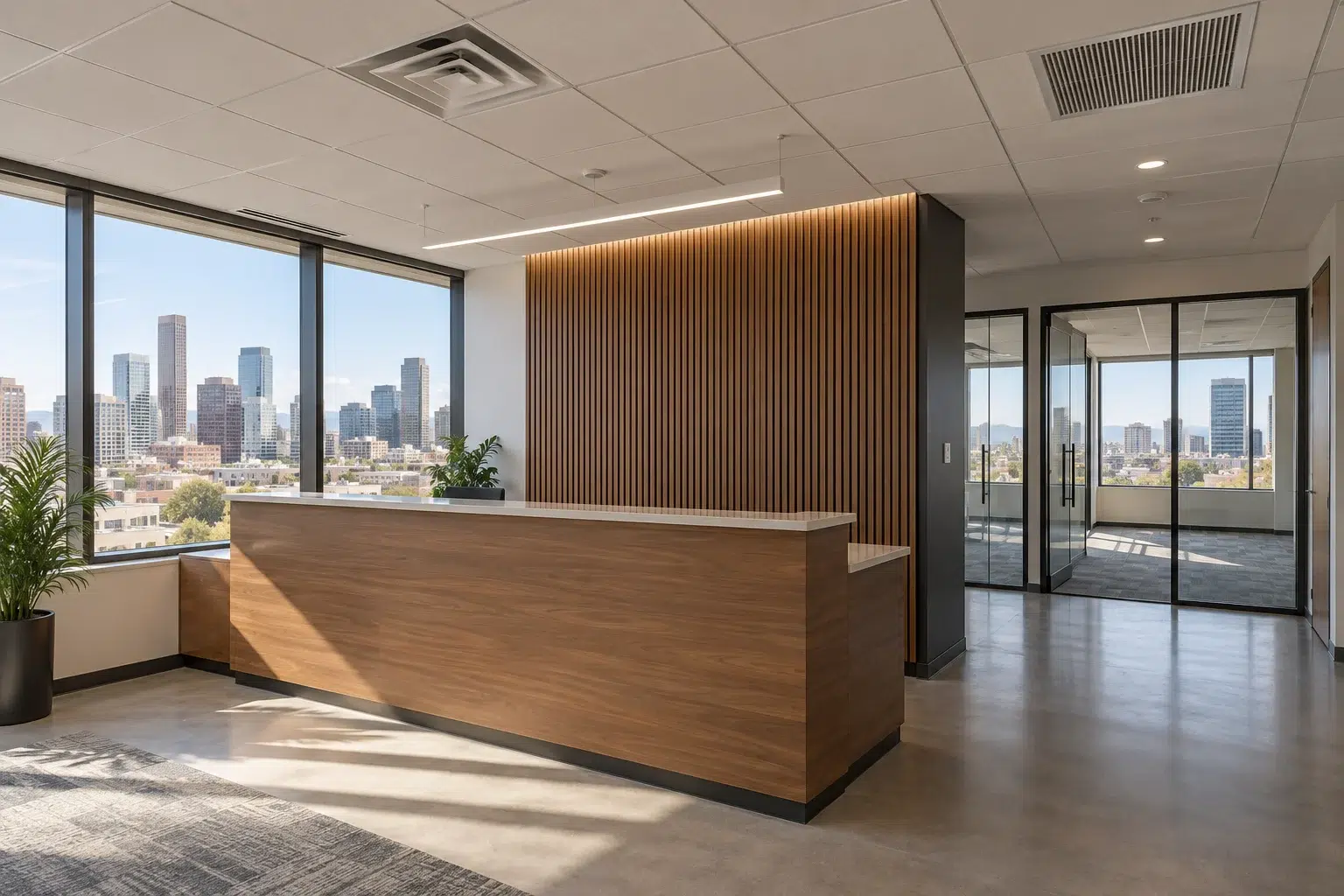


Post-construction air duct cleaning in a Denver commercial space should follow an inspection of the HVAC system. If drywall dust, sawdust, or construction debris reached the ducts, arrange cleaning after the dust-producing work ends and before normal occupancy. A new lease or a freshly painted suite, by itself, does not establish that every duct needs cleaning.
A tenant build-out has plenty of visible deadlines: flooring, furniture, inspections, and the move-in date. Ductwork is easier to overlook. A suite can look ready while debris remains above the ceiling or inside the return-air path. Equally, a dusty diffuser does not prove that an entire building needs service.
This guide gives Denver property managers, office tenants, and general contractors a practical way to define the work, compare bids, and close out a commercial cleaning project. The useful question is specific: which system serves this space, what was found inside it, and what evidence will show the agreed work is complete?
Start with the renovation history. Ask whether supply openings and returns were protected during sanding, demolition, and ceiling work. Find out whether the heating or cooling system ran while those activities were underway. These answers help identify where to inspect; they are not a substitute for inspecting.
NADCA’s commercial cleaning guidance recommends verifying that new or renovated HVAC systems are clean and protected before operation. For an existing office or retail suite, request photographs from identified sections of the affected system. Keep the location and condition together in the report so a dusty branch serving one room is not confused with evidence about every floor.
| Finding | Useful next step | What to avoid assuming |
|---|---|---|
| Debris is visible inside a duct serving the work area | Define cleaning of the affected system and check connected components. | That wiping the grille removes debris farther inside. |
| Dust is only on the room-facing diffuser | Clean the surface and inspect behind it if exposure warrants. | That a dirty grille proves every duct is contaminated. |
| Dust returns after the room is cleaned | Check continuing work, ceiling spaces, filters, and air paths. | That the HVAC system is the only possible source. |
| New paint or adhesive odor persists | Review materials, source control, and ventilation with the project team. | That duct cleaning removes all chemical emissions. |
| Damaged insulation or suspect material is found | Pause disturbance and obtain an appropriate assessment. | That ordinary brushing or vacuuming is suitable. |
For service planning, start with our commercial air duct cleaning in Denver page. The inspection should determine the cleaning scope, including any exclusions or areas that cannot be reached.
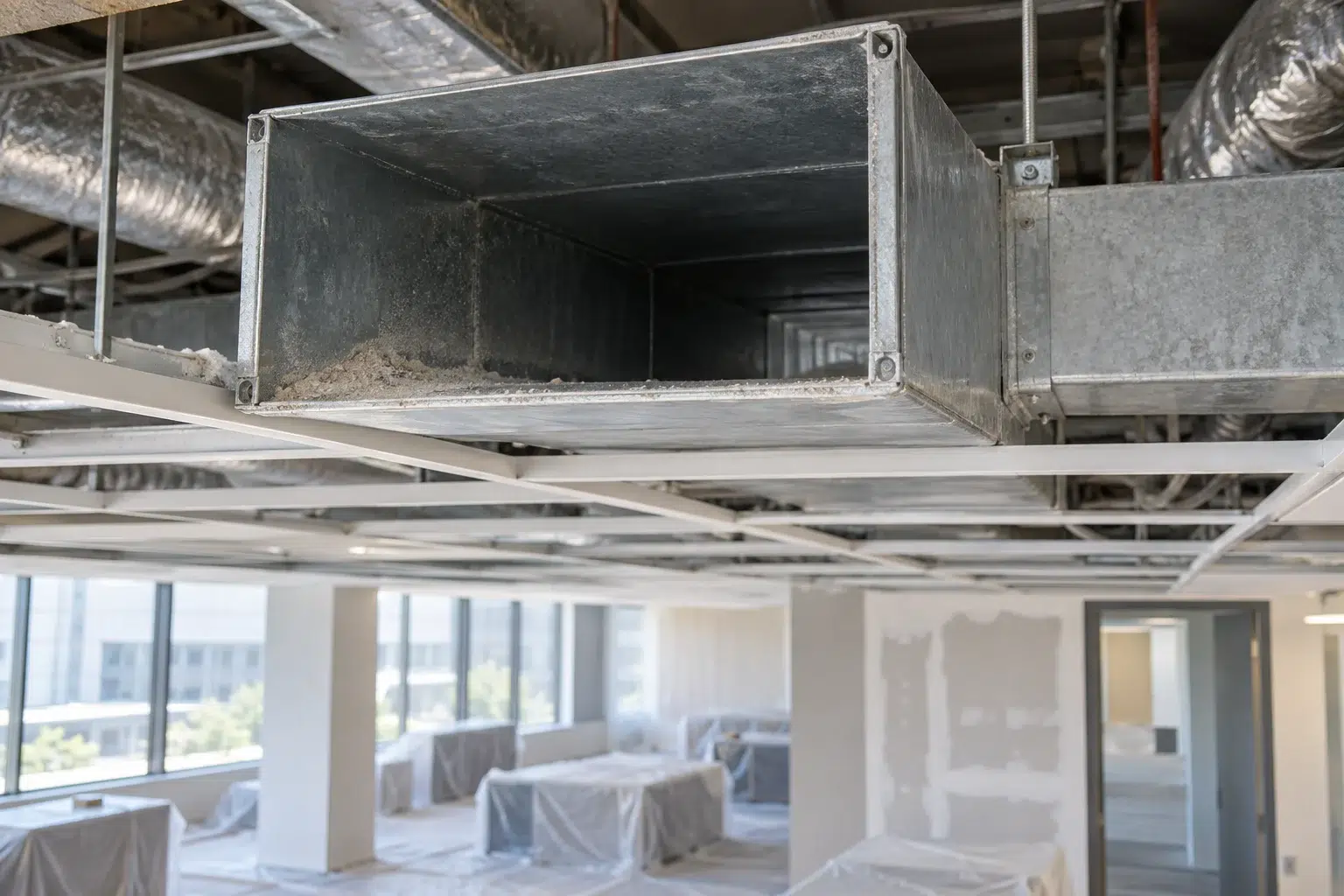
A suite boundary is not necessarily an HVAC boundary. An office may have its own rooftop unit, share an air handler with neighboring tenants, or use a ceiling space as part of its return-air path. Ask building engineering to identify the equipment and zones serving the renovation before a contractor prices the work.
Provide the floor plan, the approximate area renovated, and any available mechanical drawings. Mark rooms where dusty work occurred and note whether walls, diffusers, or returns moved. If the drawings are out of date, say so. An accurate walkthrough is more useful than a precise-looking plan that no longer matches the building.
Do not borrow a residential per-vent price to budget a multi-tenant project. Equipment access, system layout, containment, and the permitted work window can matter more than the suite’s floor area. Ask bidders to price the same systems and components so the comparison means something.
Book the assessment early enough to leave room for findings. Schedule the final cleaning after demolition, drywall sanding, and other dust-producing work are finished in the affected area. Coordinate general construction cleanup, HVAC cleaning, filter replacement, and the final room cleaning with the general contractor.
In an occupied building, the plan also needs an agreed shutdown window and protection for neighboring spaces. Confirm after-hours availability before making it part of the move-in schedule. Do not promise an overnight turnaround until the contractor has reviewed access and the actual scope.
A practical sequence is to finish dusty work, remove loose construction debris, complete the agreed HVAC work, document the results, and have the responsible HVAC team restore and check operation. Keep remaining punch-list work from reintroducing dust. If another trade must reopen a ceiling or sand a wall afterward, revisit protection and the affected area’s condition.
For Denver projects, keep cleaning closeout separate from municipal approvals. Use the city’s commercial permitting guide to find the relevant permit and inspection process, and confirm project-specific requirements with the city. A duct-cleaning receipt is not a substitute for a required inspection, approval, or certificate of occupancy.
A useful proposal names the components to be assessed or cleaned rather than saying only “all vents.” Discuss supply and return ducts, registers and diffusers, and the connected equipment that may have collected debris. Where present, clarify the treatment of air handlers, coils, drain pans, fan assemblies, and variable air volume boxes, which regulate air delivery to individual zones.
NADCA’s commercial checklist covers containment, particle collection, access openings, component cleaning, verification, and a post-project report. Use those topics to question the proposal. Different materials and equipment require appropriate methods; damaged duct liner or flexible duct may need repair or replacement rather than aggressive cleaning.
Ask how loosened material will be captured, how occupied areas will be protected, and how service openings will be closed. Also ask who will restore equipment settings. The cleaning crew should coordinate with building engineering instead of treating a shared system as an isolated room appliance.
Ordinary construction dust does not establish a need to fog or sanitize ductwork. If a chemical treatment is proposed, request its purpose, product information, suitability for the material, and any occupancy restrictions. Suspected hazardous material or microbial contamination calls for an appropriate assessment and a scope suited to that finding.
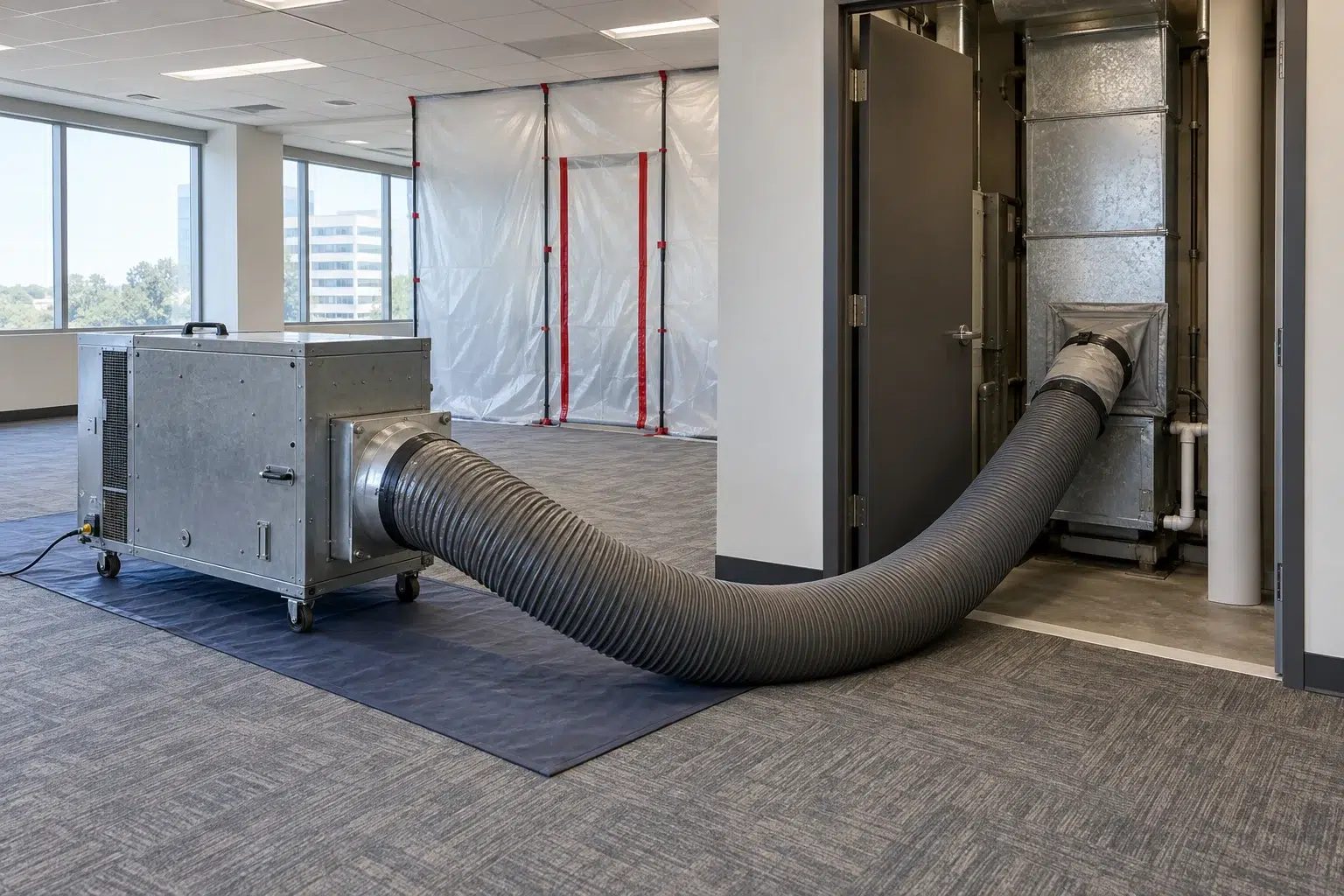
Cleaning removes material from the components included in the job. It does not establish that a renovated space receives the right amount of air. If partitions, room uses, or occupancy changed, the mechanical team should review the effect on air distribution and ventilation.
The EPA’s office-building guidance treats pollutant sources, ventilation, and filtration as related parts of indoor air quality management. New finishes can release chemicals even when ducts are clean. A stuffy conference room can have a control or ventilation problem that a cleaning visit will not resolve.
Keep testing, adjusting, and balancing, controls checks, and any required commissioning distinct in the project schedule. Ask the appropriate contractor to confirm which tasks apply. Avoid accepting a promised percentage reduction in energy use or a blanket “safe air” guarantee without measurements and a defensible basis.
Restaurant grease exhaust is a separate system with a different service scope. If the build-out includes a cooking line, use our restaurant kitchen exhaust cleaning guide to plan that work separately from the office or dining area’s comfort-air ducts.
If dust continues during normal occupancy after the renovation is complete, use our office dust investigation guide to review filters, room sources, and the connected air path before commissioning more cleaning.
Agree on the completion evidence before approving the proposal. “Cleaned the ducts” is difficult to evaluate after access panels are shut and ceiling tiles are back in place. A concise record tied to actual locations is far more useful when the landlord, tenant, and contractor review the job.
Photographs document the areas shown. They do not prove the condition of inaccessible sections, measure ventilation, or certify indoor air quality. If the contract specifies additional cleanliness verification, include those results in the handover package.
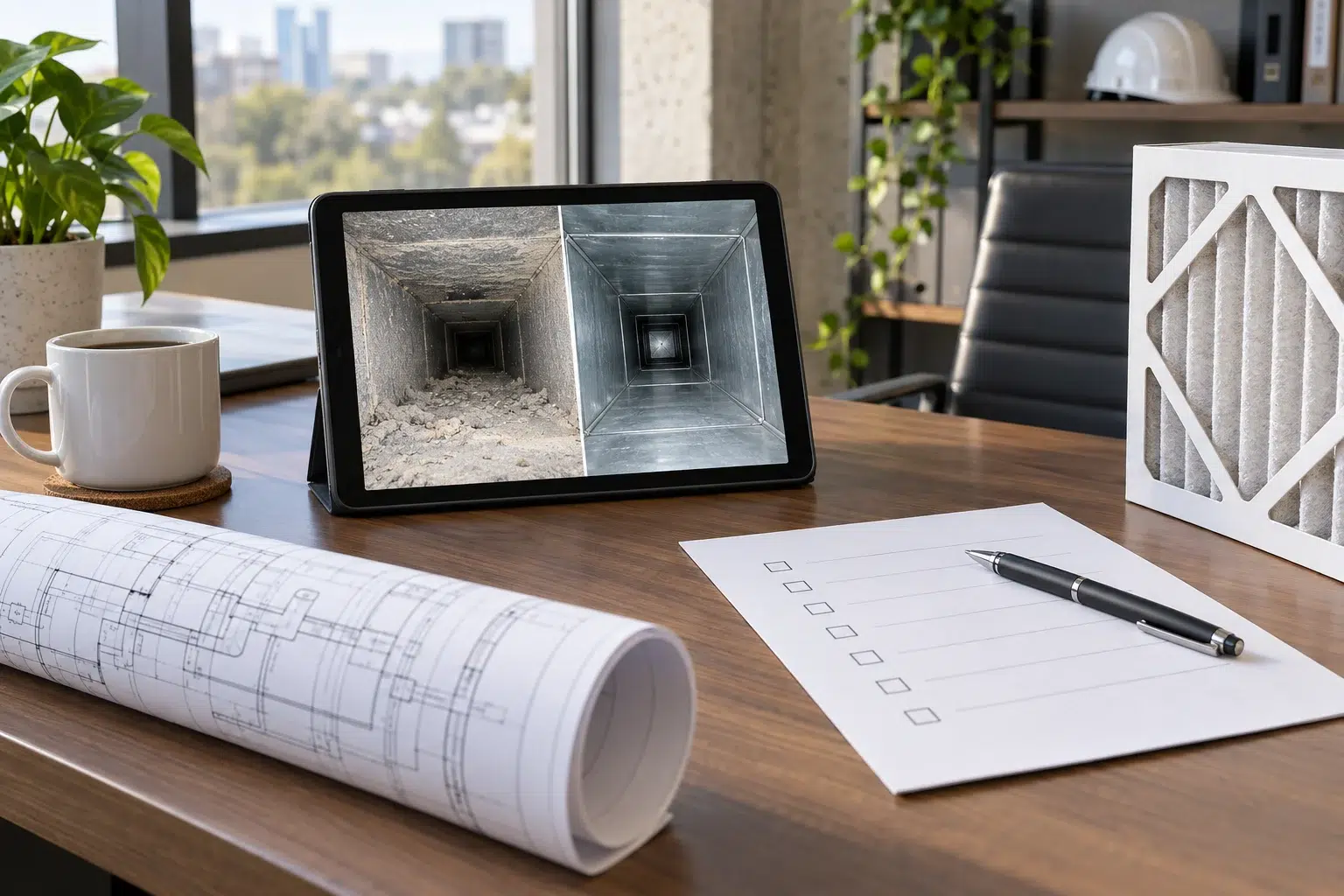
Send the property address, suite number, type of renovation, approximate affected area, and desired occupancy date. Include the system information you have, access restrictions, photos of accessible conditions, and the name of the building contact. State whether neighboring suites remain occupied.
Red Rocks Air Duct lists commercial properties and post-renovation cleanouts among its Denver-area duct cleaning services. Ask for a site-specific assessment and written scope, then confirm scheduling and any work that needs another trade. You can request a callback about your commercial project or call the number below.
No. Base the decision on the work performed, how the system was protected, and inspection findings. A small repaint with protected openings is different from extensive sanding beside an open return. Verify the condition of the affected system and clean when the findings or project specifications justify it.
Coordinate both tasks rather than relying on a single label such as “final clean.” Dust-producing work and removal of loose construction debris should precede final HVAC cleaning. Plan a final room touch-up afterward and protect the completed work from later punch-list dust. The exact sequence depends on access and the remaining trades.
It may be possible with an appropriate isolation, containment, and shutdown plan, but it is not something to assume from the suite layout. Shared equipment or return paths can affect neighboring spaces. Building management and the contractor should agree on the work window, occupant communication, and conditions for restoring service before the job starts.
Do not assume the responsible party from the source of the dust alone. Review the lease, construction agreement, and project scope with the people administering those documents. Obtain written agreement on who authorizes and pays for the work before scheduling. The cleaning contractor can document findings but does not decide contractual responsibility.
A reliable quote needs the system count, layout, condition, access, and work restrictions. A small suite with accessible ducts is a different project from multiple floors sharing equipment. Ask for a walkthrough and an itemized scope, including exclusions and potential additional work. A flat residential vent price is not a dependable commercial budget.
Not necessarily. Those odors may come from materials in the room rather than deposits inside ducts. Review product use, source control, and ventilation with the project team. Cleaning can address material in the system when it is present, but it should not be sold as a complete solution for chemical emissions from new finishes.
No. Cleaning addresses deposits on specified components. Air balancing checks and adjusts air delivery; commissioning evaluates performance against project requirements. A renovated layout may need those services even after the ducts are clean. Identify the responsible mechanical professional and include each applicable task separately in the handover plan.
Keep the agreed scope, completion report, labeled inspection photographs, filter records, and any unresolved findings. Record who restored and checked operation. These documents help future maintenance and landlord-tenant handover, but a cleaning invoice is not an indoor-air-quality clearance or a substitute for required municipal approvals.
Prepared by Red Rocks Air Duct. Sources reviewed September 23, 2026: NADCA’s commercial cleaning process and checklist, the EPA’s office-building indoor air quality guidance, and Denver’s commercial permitting guide. The photographs are AI-generated illustrations, not images of customer projects.